


An Enlightened Being Is Not a Follower
- David Roylance
- 1 day ago
- 4 min read
Updated: 3 hours ago
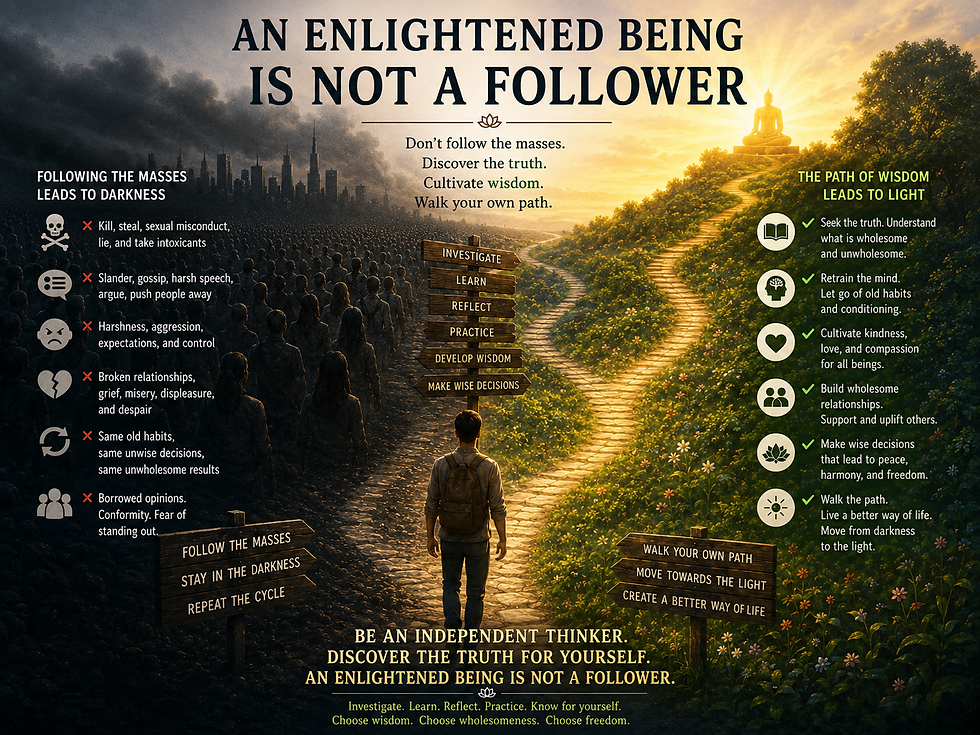
To learn, reflect on, and practice The Teachings of The Buddha with the goal of attaining Enlightenment, a Practitioner needs to be willing to think independently rather than simply follow the masses. This does not mean rejecting the guidance of a wise and knowledgeable Teacher. A Teacher can explain The Teachings, provide direction, and help a Practitioner understand how to walk The Path to Enlightenment. However, each Practitioner must still investigate The Teachings, reflect on them carefully, practice them diligently, and verify the results through their own direct experience. Wisdom does not develop through blind acceptance or borrowed opinions. It develops when a person learns to recognize for themselves what is wise and unwise, wholesome and unwholesome, and beneficial and harmful. Following the Masses Does Not Lead to Enlightenment There are very few Enlightened beings in the world. Therefore, merely following what most people think, say, or do will not lead a Practitioner out of the darkness of ignorance and into the light of wisdom. The masses are still influenced by craving, anger, and ignorance (unknowing of true reality). These conditions of mind produce unskillful intentions, speech, and actions that lead to unwholesome results (i.e. unwholesome Kamma). When a person follows the behavior of the world without investigating it, they may continue to kill, steal, engage in sexual misconduct, lie, and consume substances that cause heedlessness. They may also participate in gossip, slander, harsh speech, arguments, resentment, and conflict. These behaviors are common, but that does not make them wise or wholesome. A Practitioner needs to learn to examine every decision according to its “causes and results” rather than accepting something merely because it is familiar, popular, or socially approved. Moving Beyond Old Habits One of the challenges encountered on The Path to Enlightenment is that the mind often continues to repeat old habits even after a Practitioner begins learning The Teachings of The Buddha. The mind has been conditioned through repeated intentions, speech, actions, reactions, and experiences. Because of this conditioning, it may repeatedly return to the same destructive patterns—even when those patterns have already produced grief, misery, displeasure, despair, broken relationships, and other unwholesome results (i.e. unwholesome Kamma). A Practitioner may recognize that the way they have lived in the past has not produced peacefulness, yet the mind may still feel drawn toward familiar reactions and unwise decision making. When painful feelings arise, the unEnlightened mind may push people or situations away. It may become harsh, aggressive, defensive, or demanding. It may develop expectations that others must think, speak, or behave according to its preferences. This creates conflict and prevents the mind from residing peacefully and harmoniously with all beings. The Path to Enlightenment involves retraining the mind so that it no longer automatically returns to these old habits. A Practitioner learns to abandon destructive intentions, ideas, speech, and actions while cultivating a wiser and more wholesome way of living.
A Better Way of Life A Practitioner is working to discover and practice a better way of life—one that does not involve constantly viewing others as enemies, reacting with anger, or repeatedly damaging relationships. Continuing to make the same destructive decisions will produce the same destructive results. When the causes remain unchanged, the results will remain unchanged. If a person continues to think, speak, and act as they have in the past, they should not expect their life to become more peaceful. The same unwise causes will continue to produce grief, conflict, displeasure, broken relationships, and multiple forms of discontentedness. To experience different results, a Practitioner will need to develop different causes - they will need to make wise decisions. An individual needs to apply attention to learning what is wise and wholesome and then having the discipline to make decisions based on that wisdom—even when those decisions are different from what the masses are choosing to do. An Enlightened Being Is Not a Follower An Enlightened being is not a follower of popular opinions, destructive customs, or the unwholesome behavior of the world. An Enlightened being has cultivated wisdom by discovering the truth through learning, reflection, practice, and direct experience. They have worked diligently to eliminate destructive decisions, harmful ideas, and unskillful patterns of thinking. They are no longer controlled by the desire to conform to the opinions or behavior of others. Instead, they live according to wisdom. Their intentions, speech, and actions are guided by an understanding of what leads to peacefulness, harmony, and wholesome results (i.e. wholesome Kamma). They do not need the masses to approve of their decisions because their choices are not based on popularity or social acceptance. They are based on truth, the wisdom of The Natural Laws of Existence, The Teachings of The Buddha.
Learn to Know for Yourself
To continue progressing toward Enlightenment, a Practitioner would be wise to not look at their past behavior and assume it should be repeated simply because it is familiar.
They would also be wise to not look at other unEnlightened beings and imitate the harmful behavior that is common throughout the world.
Instead, a Practitioner will need to continually investigate:
What is wise and what is unwise?
What is wholesome and what is unwholesome?
What leads to harm and what leads to benefit?
What creates conflict and what creates harmony?
What strengthens craving, anger, and ignorance (unknowing of true reality)?
What supports peacefulness, kindness, love, and wisdom?
Through learning, reflection, and practice, the Practitioner gradually develops the ability to answer these questions for themselves. Depending on where you live, you may not frequently encounter people who demonstrate this way of life. Therefore, value the positive, wise, and wholesome individuals in your life. Develop relationships with people who encourage wholesome intentions, speech, and actions. Most importantly, continue practicing so that you are walking from the darkness of ignorance toward the light of wisdom.Investigate The Teachings of The Buddha. Learn from a wise Teacher. Reflect carefully. Practice diligently. Observe the results. Verify The Teachings through your own experience. Do not allow your life to be guided by a borrowed opinion simply because it is accepted by the masses. Develop the wisdom to know what is wise and wholesome for yourself—and then have the courage to live according to that wisdom. An Enlightened being is not a follower. An Enlightened being knows the truth.

David Roylance is a dedicated Practitioner, Teacher, and published author who has taught The Teachings of The Buddha since 2005. Based in Chiang Mai, Thailand, he guides Household and Ordained Practitioners worldwide through courses, retreats, and special events on The Path to Enlightenment.


Comments